
The signs people notice first
Small dark droppings near cabinets, gnaw marks on food packaging and light scratching after the apartment becomes quiet are common reasons to suspect mice. You may also find shredded paper or fabric used as nesting material.
One sign rarely tells the full story. Photograph it, note the room and look for a pattern along walls and behind objects. Mice tend to travel close to edges where they feel protected.
Check the kitchen and utility openings
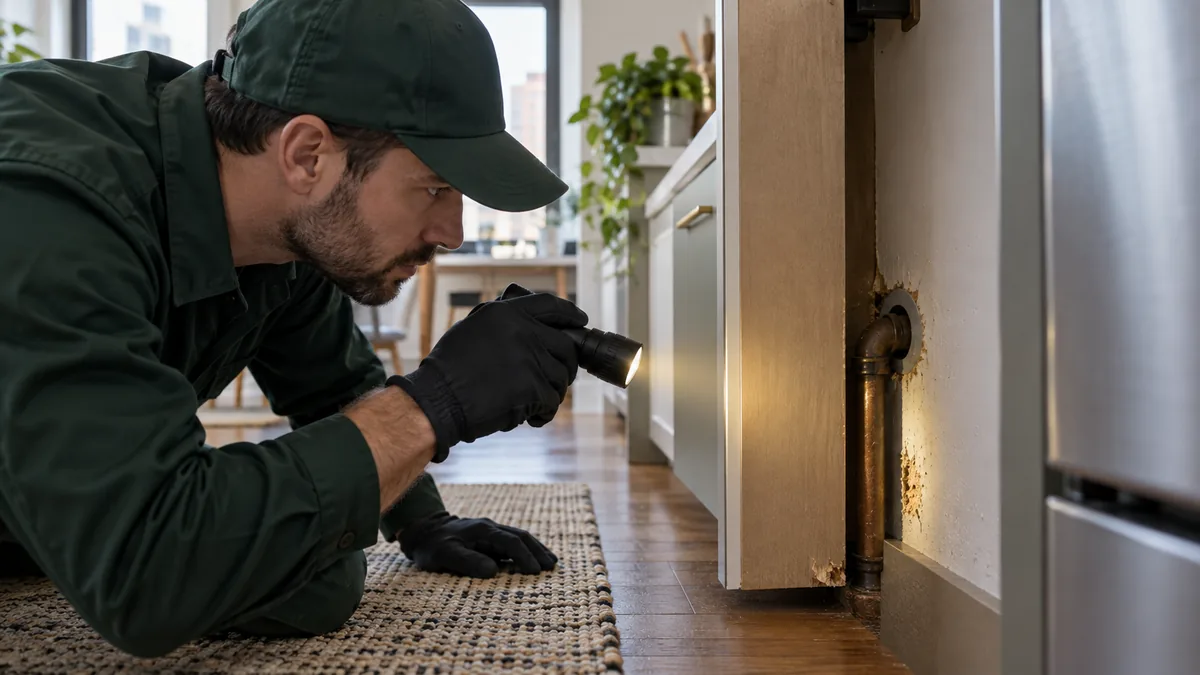
Start beneath the sink, behind the stove and refrigerator, around radiator lines and where plumbing enters a wall. NYC Health notes that mice can pass through an opening about the size of a dime, so a gap can be easy to underestimate.
Check the lower corners of cabinets and doors. Greasy rub marks, chewing or a gap with fresh debris may point to a travel route. Avoid reaching into a hidden opening with bare hands.
Remove what is helping them stay
Cleaning will not close an entry route, but it reduces the food and water available while the wider problem is addressed.
- Move dry food and pet food into hard containers with tight lids.
- Wipe crumbs and grease from overlooked edges and under appliances.
- Fix leaks and avoid leaving pet water out overnight when practical.
- Use lidded trash containers and remove full bags regularly.
Seal with the building in mind
A quick patch with soft foam may be chewed open. Durable exclusion usually combines an appropriate backing material with a sealant or repair suited to the surface. Doors may need a fitted sweep, and larger openings may need building maintenance.
In an apartment, notify the owner or manager before altering shared walls, risers or utility spaces. Activity in one unit can be connected to gaps elsewhere in the building.
When to call for help
Repeated fresh droppings, daytime sightings, activity in several rooms or continued noise after basic cleanup deserve a closer inspection. Commercial and multi-unit properties in New York City have specific responsibilities around professional pest management.
A good rodent plan combines inspection, control, monitoring and exclusion. Ask how the technician will confirm that activity has stopped before every opening is closed.